


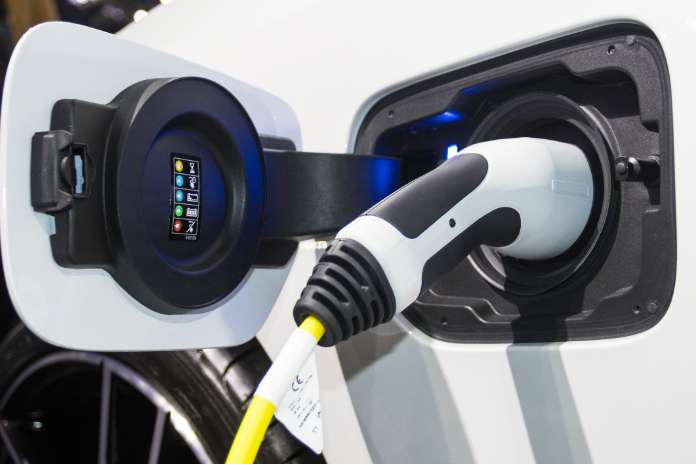
General Motors (NYSE:GM) has embarked on a transformative journey to redefine its role in the automotive industry. The company has made significant investments in electric vehicle (EV) technology, positioning itself as a leader in the transition from traditional combustion engines to sustainable alternatives. This strategic pivot is not only about keeping pace with competitors but also about leading the charge toward a greener future.
GM’s commitment to electric vehicles is evident in its ambitious goal to introduce 30 new EV models by 2025. The company plans to allocate $35 billion towards EV and autonomous vehicle development over the next five years, underscoring its dedication to innovation and sustainability. This investment is part of GM’s broader vision to become carbon neutral by 2040, highlighting its commitment to environmental responsibility.
One of the key drivers behind GM’s successful pivot is its Ultium battery technology. This proprietary technology allows for more efficient energy storage and distribution, giving GM’s EVs a competitive edge in terms of range and performance. The Ultium platform is versatile, enabling GM to manufacture a wide range of vehicles, from compact cars to heavy-duty trucks, all powered by the same underlying technology.
GM’s strategic alliances and partnerships also play a crucial role in its transformation. Collaborations with companies like Honda and LG Chem have bolstered GM’s capabilities in EV technology and broadened its market reach. These partnerships enable GM to leverage shared expertise and resources, accelerating the development and deployment of its electric vehicle lineup.
Financially, GM’s pivot to electric vehicles is showing promising results. Despite the challenges posed by the global semiconductor shortage, the company reported strong earnings in the last quarter, attributing its success to robust demand for its current EV offerings and significant progress in its EV strategy. Investors are taking note, as GM’s stock has shown resilience and growth potential amidst industry-wide disruptions.
In addition to its focus on EVs, GM is also exploring autonomous vehicle technology. The company’s subsidiary, Cruise, is at the forefront of developing self-driving cars, with plans to launch a fully autonomous ride-hailing service in the near future. This venture represents another revenue stream for GM and aligns with its vision of a future dominated by zero-emission, self-driving vehicles.
Looking ahead, GM faces several challenges, including increasing competition from both legacy automakers and new entrants in the EV space. However, its clear vision, robust investment strategy, and technological advancements position it well to navigate these challenges. As the automotive industry continues to evolve, GM’s strategic shift may well serve as a blueprint for other companies seeking to transition to a sustainable future.
Footnotes:
- General Motors plans to invest $35 billion in electric and autonomous vehicles by 2025. Source.
- The Ultium battery technology is a key component of GM’s EV strategy. Source.
Featured Image: Megapixl @ Piyaphunjun