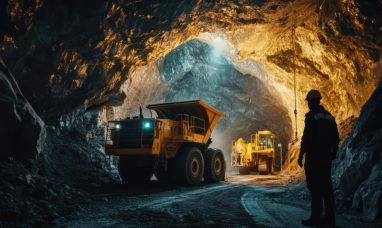
While other gold juniors are still searching for permits, funding, and feasibility studies, one small company in Canada’s most prolific gold district is already turning the wrench.
KEY STATS AT A GLANCE
-
-
- $7.8M — Fully Funded; Closed, Upsized & Oversubscribed Dec 2025
- 750 tpd — Permitted Mill Capacity; underwent +$20M in upgrades
- 158.25 metres — Best Drill Intercept Grade: 2.05 g/t Au
- ~C$59.4M — Current Market Cap
- March 2026 — PEA Target Date
-
Why This Gold Story Is Different
Here is something most investors never stop to consider: the hardest part of turning gold in the ground into cash in the bank is not finding it. It is processing it. You can discover the richest gold deposit in the world, and it means absolutely nothing if you have no way to mill it. Permits take years. Construction costs tens of millions. And by the time most junior miners get a mill approved and built, the market has long since moved on.
That is precisely why LaFleur Minerals Inc. (CSE: LFLR) (OTCQB: LFLRF) deserves your close attention right now. Because this company has already cleared the most dangerous hurdle in junior gold mining.
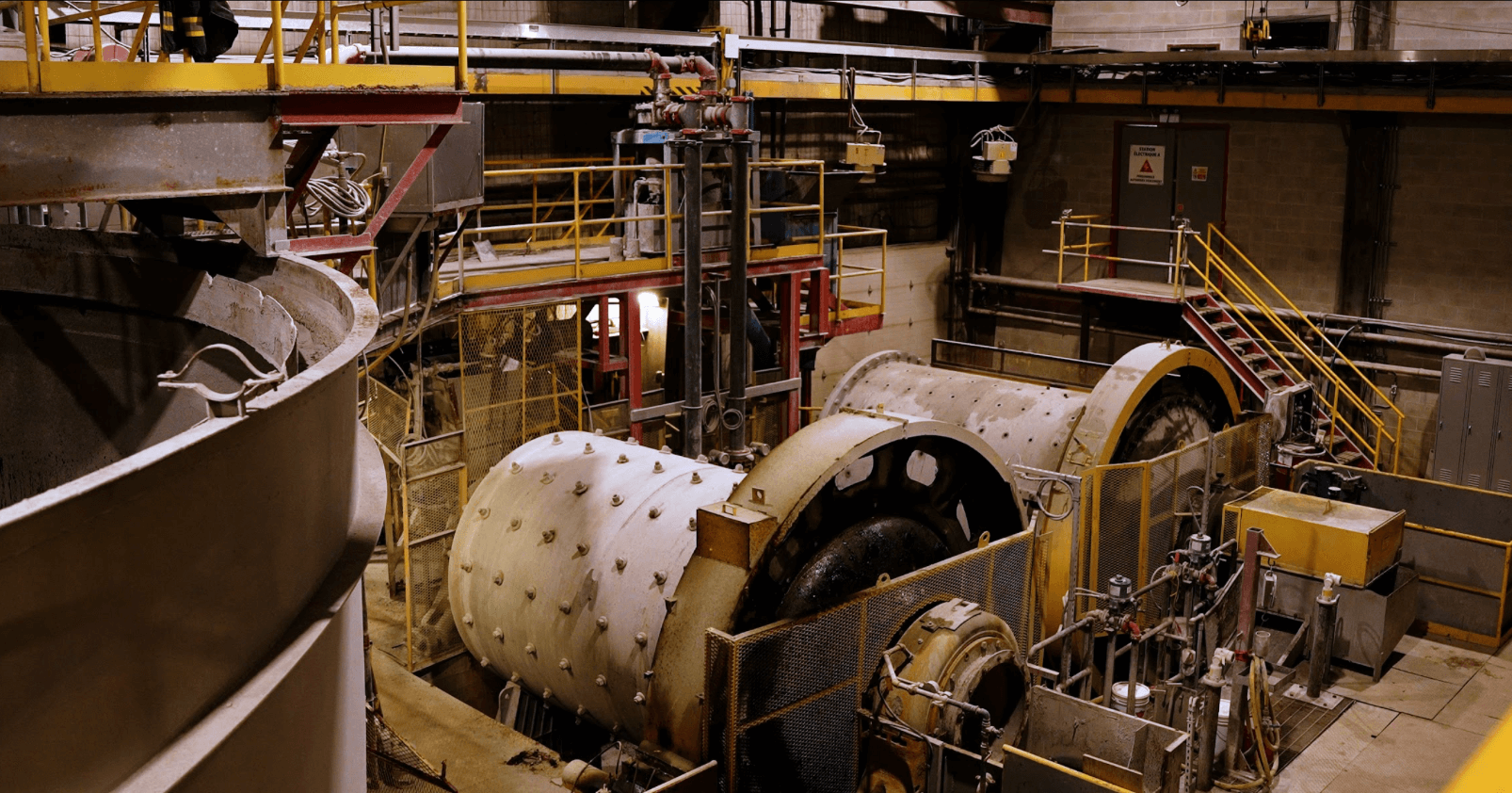
It does not need to build a mill. It does not need to wait for approvals. It already owns one. A fully permitted, C$49 million (C$71 million replacement value) as-built gold processing facility in the heart of Val-d’Or, Québec, one of the most celebrated gold mining addresses on Earth, and that mill is being actively restarted as you read this.
Gold has now climbed to nearly US$5,200 per ounce1, levels no one imagined when the Beacon Gold Mill last operated in 2022 at roughly $2,000/oz.
The economic math has changed completely.
The margins on every tonne of mineralized material processed today are more than double what they were just three years ago. And unlike most companies scrambling to take advantage of this gold price environment, LaFleur Minerals Inc. (CSE: LFLR) (OTCQB: LFLRF) is not waiting. It is executing.
“LaFleur Minerals is blessed to have the fully updated and permitted Beacon Gold Mill, tailings storage facility, and nearby Swanson Gold Deposit with an open-pit constrained mineral resource estimate. This puts LaFleur Minerals in a unique category of a full-fledged near-term gold producer in the prolific Abitibi Gold District.”
— Kal Malhi, Executive Chairman, LaFleur Minerals Inc.
In December 2025, the company closed $7,800,421 in fully funded financing, an upsized LIFE offering, an oversubscribed Flow-Through offering, and a final Hard Dollar placement, supported by placements led by established names including Canaccord Genuity, Raymond James, Red Cloud Securities, Research Capital and Ventum Financial2.
The restart is not a plan. It is a funded, active program with contractors on site. As of February 2026, approximately 30% of the total restart budget has already been deployed, with electrical upgrades and winterization largely complete, mechanical systems inspected and repaired, and critical plant components nearing operational readiness.
⚠ WHY TIMING MATTERS RIGHT NOW
The company’s Preliminary Economic Assessment (PEA), an independent study that will for the first time model the full integrated, mine-to-mill economics of the Beacon Gold Mill restart using feed from the Swanson Gold Deposit, is targeted for completion in March 2026. PEA releases in the junior mining sector are historically among the most significant re-rating catalysts a small company can produce. When investors see a credible, NI 43-101 compliant production model with real numbers attached to a real mill, the market tends to notice quickly. And with gold sitting near $5,200 an ounce, the numbers in that PEA are going to look very different from anything modeled even twelve months ago.
Yet despite all of this tangible execution, LaFleur Minerals Inc. (CSE: LFLR) (OTCQB: LFLRF) carries a market capitalization of only approximately C$59.4 million on 88,649,926 shares issued and outstanding. Consider that for a moment. Independent engineers at Bumigeme Inc. have valued the Beacon Gold Mill at C$49 million as built and permitted, with a full replacement cost including a new tailings storage facility and permitting estimated at C$71.5 million3. That means the market is currently valuing the entire company, the mill, the 18,304-hectare Swanson Gold Project, the tailings pond, the exploration upside, and the management team, at only a modest premium to what a single asset would cost to replicate from scratch.
That kind of valuation disconnect rarely lasts. The market has not yet priced in the PEA. It has not yet priced in the maiden gold pour. It has not yet priced in a landmark drill intercept of 2.05 g/t Au over 158.25 metres, one of the most compelling bulk-width intercepts reported in the Abitibi in recent memory, or the 60-hole, 16,592-metre maiden drill program that confirmed broad, continuous, near-surface gold mineralization at Swanson4.
There is a moment in every junior gold story when the pieces all come together at once, the funding, the infrastructure, the drill results, the macro tailwind, and the market finally looks up and takes notice.
For LaFleur Minerals Inc. (CSE: LFLR) (OTCQB: LFLRF), that moment appears to be now. The assets are real, the funding is real, the restart is real, and the gold in the ground is real. The only question worth asking is whether you want to be reading about this company before the market catches on, or after.
What follows is a detailed look at exactly why LaFleur Minerals (CSE: LFLR) (OTCQB: LFLRF) has assembled what CEO Paul Ténière calls “a technically differentiated and strategically rare asset base” and why, in a gold market trading at nearly $5,200 an ounce, the combination of a funded mill restart, a district-scale gold project with exceptional drill results, and a sub-C$60 million market cap may represent one of the most compelling stories in the junior resource sector today.
Top 8 Reasons
to Watch LaFleur Minerals Inc. (CSE: LFLR) (OTCQB: LFLRF) Right Now
1
The Market Is Valuing the Whole Company at Less Than One Asset Is Worth
Independent engineers valued the Beacon Gold Mill alone at C$49 million as built and permitted. Full replacement cost: C$71.5 million.
The entire company’s market cap is approximately C$59.4 million.
That means shareholders are getting the Swanson Gold Project, the tailings pond, the exploration upside, and the management team for nearly nothing. That kind of mispricing does not last.
2
The Mill Is Funded for Restart, Fully Permitted, and Actively Headed into Gold Production
This is not a company talking about restarting a mill someday.
LaFleur Minerals Inc. (CSE: LFLR) (OTCQB: LFLRF) closed C$7,800,421 in financing in December 2025, backed by Canaccord Genuity, Raymond James, Red Cloud Securities, Research Capital and Ventum Financial. Contractors are on site. Thirty percent of the restart budget is already spent. The mill is being turned back on right now5.
3
Gold at $5,200 Makes This Mill Extraordinarily Valuable
The Beacon Gold Mill was designed for a $2,000 gold world.
It is being restarted in a $5,200 gold world.
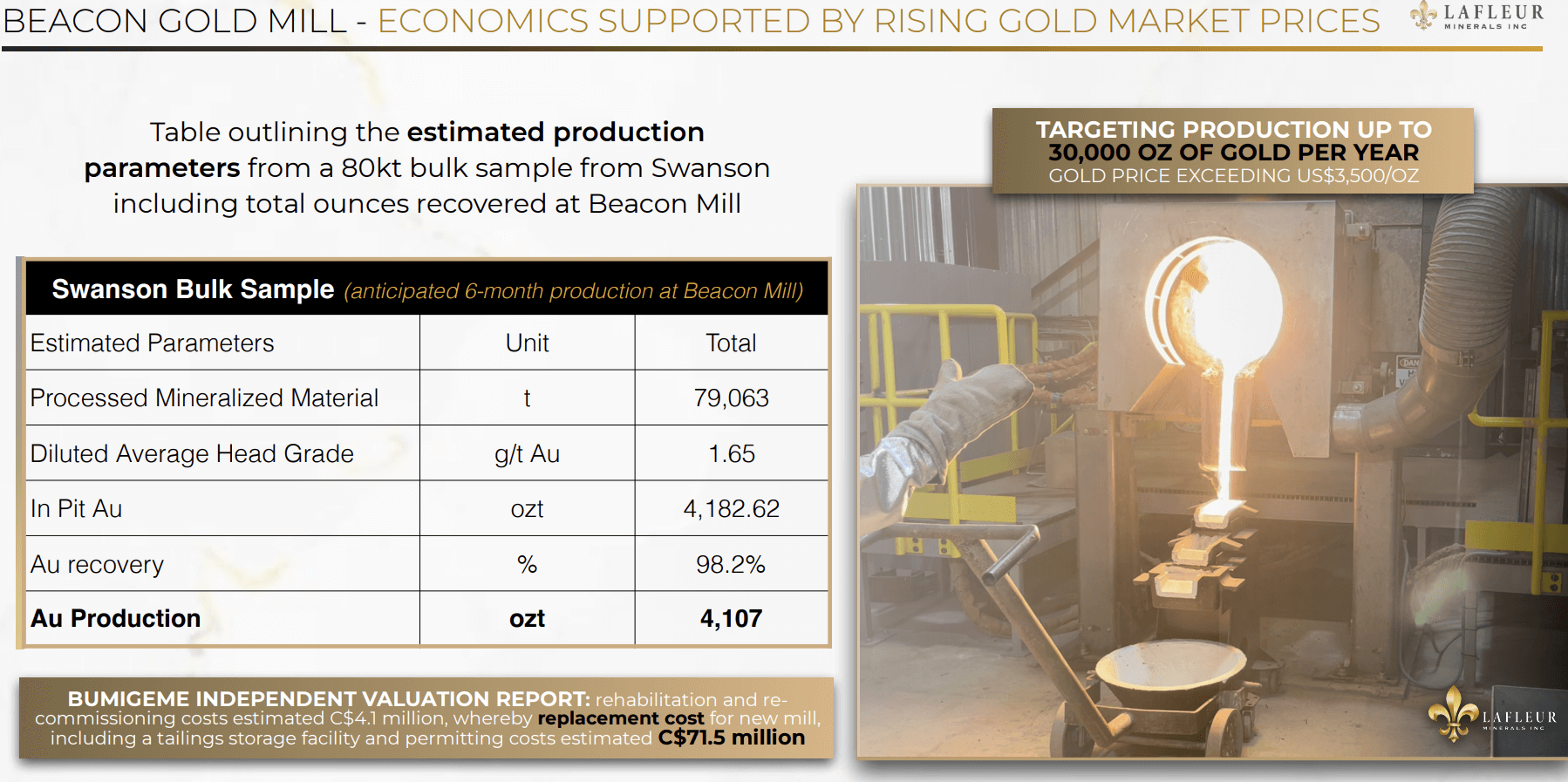
Processing costs have not increased by 145%. Revenue per ounce has. At full capacity the mill targets up to 30,000 ounces per year. At today’s gold price that is approximately $156 million in potential gross annual revenue from a company with a C$59.4 million market cap.
4
Swanson Drill Program That Delivered Beyond Expectations
Sixty holes. 16,592 metres. One maiden drill program.
The headline: 2.05 g/t Au over 158.25 metres. One of the most compelling bulk-width gold intercepts in the Abitibi in recent memory. Supporting holes returned 2.97 g/t Au over 66 metres and 3.15 g/t Au over 51.4 metres. Broad, continuous, consistent gold mineralization confirmed across the deposit6. The drilling program confirmed the presence of broad, continuous, near-surface gold mineralization, returning multiple long intercepts with consistent gold grades, with narrow high-grade results including 121.0 g/t Au over 1.1 metres that assist to de-risk the Project and strengthen its development thesis and open-pit potential.
5
A PEA That Could Redefine How the Market Values This Company
In March 2026, the Company aims to publish its Preliminary Economic Assessment led by Environmental Resources Management (ERM) intended to outline the economic viability and plan for the Beacon Gold Mill restart using mineralized material sourced from the Company’s nearby Swanson Gold Project.
For the first time, the market will see real production numbers, real cash flow estimates, and real capital cost projections attached to these assets. At $5,200 gold those numbers will look very different from anything modeled twelve months ago. PEA publications are consistently among the most powerful re-rating catalysts in the junior mining sector7.
6
District-Scale Land Package With a New Discovery Already in Hand
The Swanson Gold Project covers 18,304 hectares with 27 documented mineral showings and a current NI 43-101 resource of 187,900 ounces.
The 2025 drill program also hit a brand new discovery at the Jackson Showing, 6.2 kilometres from the main deposit, returning up to 5.78 g/t Au at shallow near-surface depths. The resource target is one million ounces. The ground to get there is already controlled by LaFleur Minerals Inc. (CSE: LFLR) (OTCQB: LFLRF) and forms part of the Company’s district-scale Swanson Gold Project
7
Over 85% of Shares in Friendly Hands
88,649,926 shares outstanding. Only 15% in public float.
Management, associates, Bull Run Capital, and Coloured Ties Capital control the rest. When insiders hold this much of a company that is actively deploying capital toward a production milestone, their interests and shareholder interests are pointing in exactly the same direction. Additional coverage from Fundamental Research Corp., Red Cloud Securities and Zacks adds independent visibility, with strong buy ratings and fair market value estimated over $1/share
8
Multiple Catalysts Arriving in a Compressed Timeframe
The PEA in March 2026. The trial run of 10,000 to 20,000 tonnes of on-site stockpile material. The maiden gold pour. The updated resource estimate. The next drill program. Potential custom milling agreements with regional producers.
For LaFleur Minerals Inc. (CSE: LFLR) (OTCQB: LFLRF) this is not a story where investors wait years for one binary event. Multiple catalysts are converging right now. Each one capable of reshaping how the market sees this company.
The Beacon Gold Mill: The $49 Million Asset the Market Has Not Fully Priced In Yet
Most junior gold companies have a deposit and a dream.
LaFleur Minerals Inc. (CSE: LFLR) (OTCQB: LFLRF) has a deposit and a mill.
A real one. Permitted. Modernized. Actively restarting. Right now.
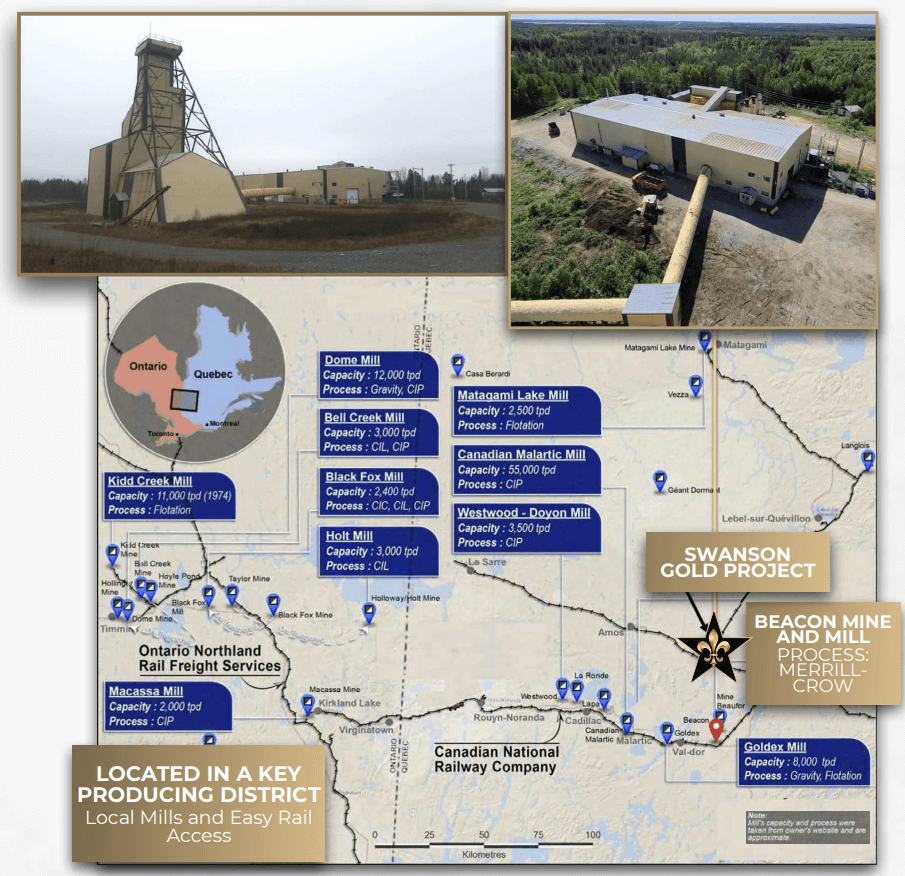
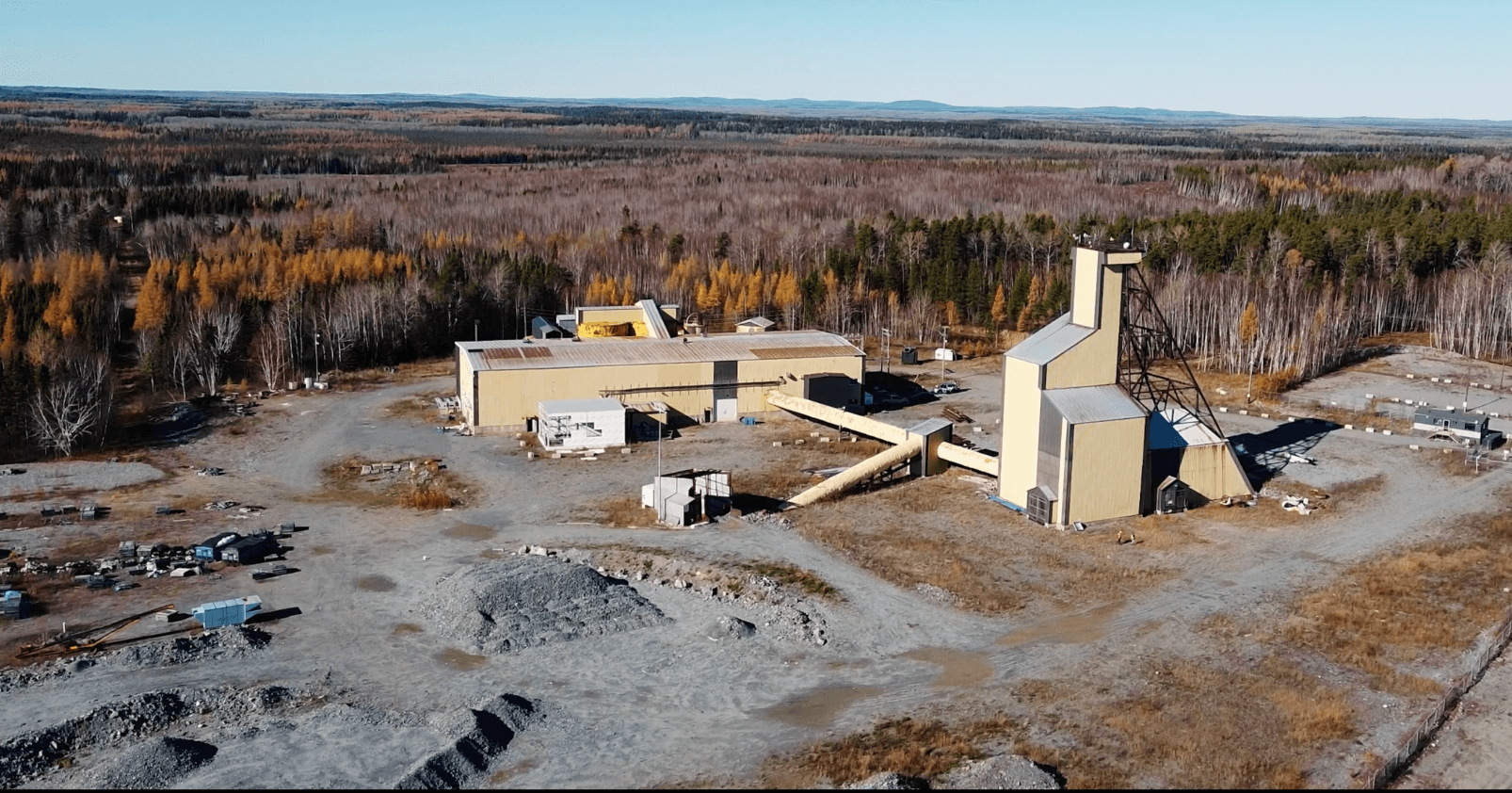
The Beacon Gold Mill is a fully permitted 750-tonne-per-day gold processing facility in Val-d’Or, Quebec. It was upgraded to the tune of $20 million by the previous owner before LaFleur acquired it for a fraction of that cost out of Monarch Mining’s insolvency proceedings in 2024.
Independent engineers at Bumigeme Inc. have valued it at C$49 million as built and permitted. Full replacement cost including a new tailings storage facility and permitting? C$71.5 million8.
The market cap of the entire company is approximately C$59.4 million.
The math is not subtle.
It Is Not a Plan. It Is Already Happening.
As of February 2026, 30% of the restart budget has already been spent. Not committed. Spent.
Electrical upgrades and winterization are largely complete. Mechanical systems inspected and repaired. Structural integrity confirmed. Fire suppression and security systems installed and operational.
And here is what most investors have not focused on yet.
Between 10,000 and 20,000 tonnes of mineralized stockpile material are already sitting on site at Beacon from prior operations. That is the feedstock for the mill’s first trial run. No waiting for Swanson ore. No permitting delays. The path to a maiden gold pour is already in motion.
Gold at $5,200 Changes Everything
This mill last ran in 2022 when gold was at roughly $2,000 per ounce.
It is being restarted into a market at nearly $5,200 per ounce.
Processing costs have not increased by 145%. Labour has not increased by 145%. What has increased is the value of every single ounce this mill produces.
At full capacity the mill targets up to 30,000 ounces per year. At $2,000/oz that was roughly $60 million in gross annual revenue. At $5,200/oz it is approximately $156 million.
Same mill. Same costs. Dramatically different economics.
The Custom Milling Angle
Owning a mill in the Abitibi means more than processing your own ore.
The Val-d’Or region hosts over 100 historical and operating mines. Permitted milling capacity is scarce. Junior producers with viable deposits but no processing facilities need somewhere to send their ore.
LaFleur Minerals Inc. (CSE: LFLR) (OTCQB: LFLRF) can be that somewhere.
Nicola Mining proved the model with a 200 tpd facility in British Columbia, less than one third the size of Beacon. Custom milling revenues started flowing before their own mine reached full production. The stock roughly doubled in months.
Beacon sits in a far richer neighbourhood. The custom milling opportunity here is larger, closer, and more immediate.
The West Red Lake Parallel
West Red Lake Gold Mines was a quiet Ontario junior sitting at roughly a $25 million market cap when it acquired its permitted Madsen Mill and committed to restarting it.
The market eventually caught up to what that meant.
The market cap climbed to over $518 million. A 2,000% re-rating. Driven almost entirely by one thing: a permitted mill moving from potential to production.
LaFleur Minerals Inc. (CSE: LFLR) (OTCQB: LFLRF) is at that same inflection point today. With one critical difference.
Gold was not at $5,200 when West Red Lake made its move.
Press Releases
- LaFleur Minerals Progressing Towards Gold Pour at Beacon Gold Mill in Val-d’Or, Québec
- LaFleur Minerals Reports Assay Results Highlighting 2.05 g/t Au over 158.25 metres, Confirming Strong Gold Continuity at Swanson Gold Project
- LaFleur Minerals Updates PEA and Beacon Gold Mill Restart Work
- LaFleur Minerals Closes LIFE, Flow Thru and Final Hard Dollar Offering for $900,000 to Complete Total of $7,800,421 Funding to Restart Beacon Gold Mill Production Operations in Abitibi Greenstone Belt
- LaFleur Minerals Announces Brokered Private Placement of Gold-Linked Convertible Notes to Finance Restart of Gold Production at Beacon Gold Mill
The Swanson Gold Project: The Fuel That Feeds the Engine
Every mill needs ore.
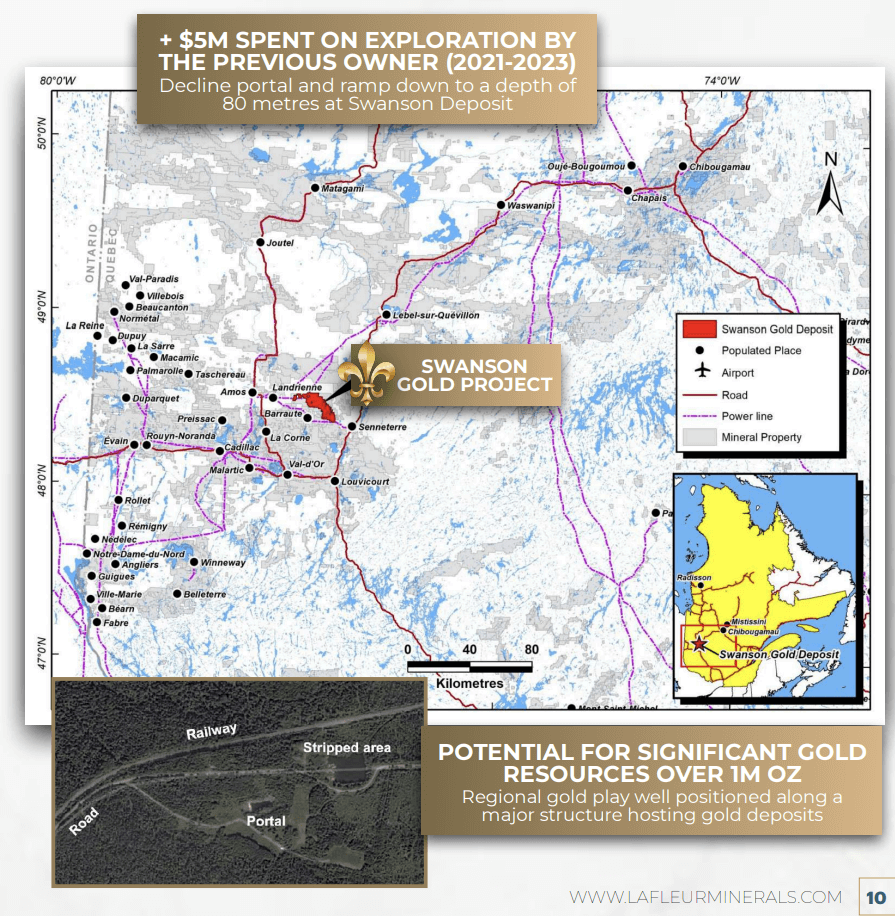
The Swanson Gold Project is LaFleur Minerals Inc. (CSE: LFLR) (OTCQB: LFLRF)‘s answer to that need. Located approximately 50 to 60 kilometres north of the Beacon Gold Mill, connected by existing road and CN Rail infrastructure, sitting on the same ancient geological structure that has produced gold in the Abitibi for nearly a century.
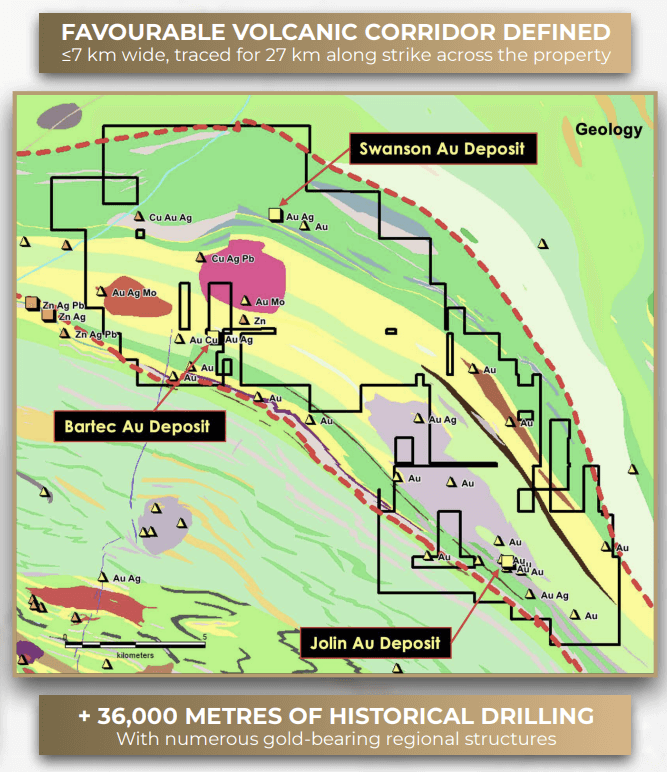
This is not a small claim block with a single drill hole. It is a 18,304-hectare district-scale land package spanning 183 square kilometres. The property has grown threefold since LaFleur acquired it. Documented mineral showings have expanded from three to twenty-seven. Agnico Eagle drilled here. Lac Minerals drilled here. The geology has been tested by serious companies with serious capital.
What Is Already in the Ground
The Swanson Gold Project carries a current NI 43-101 compliant mineral resource estimate prepared by InnovExplo10:
Indicated: 2,113,000 tonnes at 1.8 g/t gold for 123,400 ounces
Inferred: 872,000 tonnes at 2.3 g/t gold for 64,500 ounces
The majority of the Indicated resource sits within an optimized open-pit shell. An underground ramp already exists to 80 metres depth. And the entire mineralized envelope remains open in all directions.
That last point matters. Open in all directions means every future drill hole has the potential to grow the resource. The 187,900 ounces currently defined is a floor, not a ceiling.
The 2025 Drill Program Delivered
Sixty holes. 16,592 metres. The most important technical program in the company’s history.
The headline result was 2.05 g/t Au over 158.25 metres. That is not a vein. That is a bulk-mineable system with the kind of continuous width that makes open-pit economics compelling11.
Supporting intercepts confirmed the picture:
1.37 g/t Au over 80.8 metres
2.97 g/t Au over 66.0 metres including 91.1 g/t Au over 1.5 metres
3.15 g/t Au over 51.4 metres including 92.9 g/t Au over 0.75 metres
Broad. Continuous. Consistent. These results go directly into the PEA being completed by ERM in March 2026.
A New Discovery the Market Has Barely Noticed
Six kilometres southwest of the main deposit, the 2025 program hit something new at the Jackson Showing.
Near-surface gold. First holes in. Results up to 5.78 g/t Au over 2.05 metres.
Early stage, yes. But shallow near-surface gold on a property with this geological pedigree is exactly how satellite deposits are born. Additional mill feed. Extended production life. Better overall economics. The market has not begun to price in what the Jackson Showing could become.
The Path to One Million Ounces
LaFleur Minerals Inc. (CSE: LFLR) (OTCQB: LFLRF) has stated a clear target: grow the resource toward one million ounces across this district-scale property.
The 2025 drill results have already extended mineralisation beyond the current wireframes. The Jackson Showing is a new discovery outside the current resource area entirely. The Bartec and Jolin deposits on the same property carry historical estimates pointing to high-grade gold potential along the same structural corridor.
A company in the Abitibi with a million-ounce resource and a fully permitted mill already in production sits in a very different valuation conversation than where LaFleur Minerals Inc. (CSE: LFLR) (OTCQB: LFLRF) trades today.
The milestones to get there are arriving now.
The Market Has Seen This Movie Before. Here Is How It Ends.
The Abitibi Greenstone Belt is the most closely watched junior gold address in the world. Every serious resource investor knows it. And right now, the market is paying significant premiums for companies operating in this district with nothing more than a deposit and a drill program.
No mill. No permits. No production path. Just ground and a story.
LaFleur Minerals Inc. (CSE: LFLR) (OTCQB: LFLRF) has ground, a story, a funded mill restart already underway, and a PEA weeks away. Yet it trades at a fraction of what pure explorers in the same belt command.
Look at the evidence.
Amex Exploration (TSXV: AMX) is advancing its high-grade Perron gold project in Quebec’s Abitibi region. Outstanding results. Active drill program. Phase 1 feasibility study underway. The market cap is approximately C$708 million.
Amex has no mill. It has no permitted processing facility. Its own PEA outlined a two-stage production plan that calls for an initial toll milling operation before an on-site plant can eventually be built. In other words, Amex’s production path depends on finding a mill to process its ore. LaFleur Minerals Inc. (CSE: LFLR) (OTCQB: LFLRF) owns a mill that could potentially process it.
The market is currently pricing Amex at nearly 12 times LaFleur’s market cap.
Radisson Mining Resources (TSXV: RDS) is advancing the high-grade O’Brien Gold Project in the Abitibi, one of the most celebrated historical gold addresses in Quebec. Strong grades. Active development program. A signed Letter of Intent with IAMGOLD. The market cap is approximately C$331 million.
Radisson has no mill. No permitted processing facility. No near-term production path without one.
The market is currently pricing Radisson at nearly 6 times LaFleur’s market cap.
Cartier Resources (TSXV: ECR) is advancing the Cadillac Gold Project in Val-d’Or, Quebec. Significant resource growth. Active 100,000-metre drill program. Nearly 800,000 ounces Measured and Indicated plus over 2.4 million ounces Inferred. The market cap is approximately C$130 million.
Cartier has no mill. Its metallurgical testwork program is just getting started. Production is years away.
The market is currently pricing Cartier at more than 2 times LaFleur’s market cap.
The Pattern Is Unmistakable.
Three companies. All in Abitibi. All pure explorers. No mill. No near-term production path. Combined market cap approaching C$1.2 billion.
LaFleur Minerals Inc. (CSE: LFLR) (OTCQB: LFLRF) has a funded mill restart underway, a PEA arriving in March 2026, drill results that rival anything these companies have published, and a C$49 million as-built permitted mill sitting on its balance sheet.
Market cap: approximately C$59.4 million.
Something does not add up. And in junior mining, when something does not add up, it usually means opportunity.
The West Red Lake Blueprint
We know what happens when the market finally connects the dots on a permitted mill story. West Red Lake Gold Mines sat at roughly a $25 million market cap when it committed to restarting its permitted Madsen Mill in Ontario. The production story became real and verifiable. The market responded.
The market cap climbed to over $518 million. A 2,000% re-rating, driven almost entirely by one thing: a permitted mill crossing from potential to production.
LaFleur Minerals Inc. (CSE: LFLR) (OTCQB: LFLRF) is at that same inflection point. With one major additional advantage. Gold was not at $5,200 when West Red Lake made its move.
How LaFleur Stacks Up
| Company | Ticker | Location | Stage | Mill Ownership | Stock Price (CAD) | Market Cap (CAD) |
| Amex Exploration | TSXV: AMX | Abitibi, QC | Feasibility Study | None — toll milling required | C$4.94 | ~C$708M |
| Radisson Mining | TSXV: RDS | Abitibi, QC | Advanced Exploration | None | C$0.72 | ~C$331M |
| Cartier Resources | TSXV: ECR | Val-d’Or, QC | Resource Definition | None | C$0.29 | ~C$130M |
| LaFleur Minerals | CSE: LFLR | Val-d’Or, QC | Mill Restarting Now | 100% owned, C$49M as-built | C$0.67 | ~C$59.4M |
The only company in this table with a permitted mill already restarting trades at the lowest market cap of the group.
Stock prices and market capitalizations sourced from TradingView.com as of February 24, 2026. LaFleur Minerals market cap based on 88,649,926 shares outstanding at C$0.67 per share. Peer descriptions based on respective company disclosures and press releases. All figures in Canadian dollars. Comparisons are for informational purposes only.
Fair point. Here it is tightened up.
The Countdown Has Already Started
Most junior mining stories ask you to wait.
Wait for the drill results. Wait for the resource. Wait for the permit. Wait for the financing. Wait for the mill.
LaFleur Minerals Inc. (CSE: LFLR) (OTCQB: LFLRF) is not asking you to wait for any of that. The financing is closed. The permits exist. The mill is restarting right now. And the next several months are loaded with specific catalysts that each carry the potential to move this stock independently.
Here is what is coming.
March 2026: The PEA
This is the most anticipated event in the LaFleur story right now.
Environmental Resources Management (ERM), one of the world’s leading independent mining consultancies, is completing a Preliminary Economic Assessment for the combined Beacon Gold Mill restart and Swanson Gold Project. Target: March 2026.
For the first time, the market will see real independent numbers. Production estimates. Cash flow projections. Capital costs. All NI 43-101 compliant. All modeled at gold prices that reflect today’s reality, not the $2,000 world of 2022.
The base case is 1,000 tpd. Long-term scenarios extend to 3,000 to 4,000 tpd. Metallurgical testwork using 400 kilograms of representative drill core was submitted to SGS Canada in January 2026 and is underway12.
Right now the market has no credible production model to price in. In weeks, it will.
Near-Term: Trial Run and Maiden Gold Pour
Between 10,000 and 20,000 tonnes of mineralized stockpile material are already sitting on site at Beacon from prior operations.
No waiting for Swanson ore. No new permits required. That material feeds the mill’s first trial run and establishes the pathway to a maiden gold pour.
A maiden gold pour moves LaFleur Minerals Inc. (CSE: LFLR) (OTCQB: LFLRF) from near-term producer to actual producer. That distinction carries a valuation premium pure explorers simply cannot command13.
2026: Updated Resource Estimate
The 60-hole, 16,592-metre 2025 drill program extended mineralization beyond the current resource wireframes in multiple directions. None of those results are captured in the existing 187,900-ounce NI 43-101 estimate.
The updated resource incorporating the full program is coming in 2026. A larger number arriving alongside an active PEA and a restarting mill is a compounding story. Each catalyst makes the next one hit harder.
2026: Next Drill Program
The next phase of drilling targets both resource expansion at Swanson and follow-up at the Jackson Showing, where the first holes ever drilled returned up to 5.78 g/t Au at shallow near-surface depths.
This program drills with conviction, not just validation. Every hole brings the million-ounce target closer.
Ongoing: Custom Milling
As Beacon approaches operational readiness, custom milling shifts from future possibility to active commercial discussion.
Over 100 historical and operating mines surround the Beacon Gold Mill. Permitted milling capacity in the region is scarce. LaFleur Minerals Inc. (CSE: LFLR) (OTCQB: LFLRF) is positioned to fill that gap, generating toll milling revenue that no analyst model has yet priced in.
Seven Catalysts. One Compressed Timeline.
PEA publication. Trial run. Maiden gold pour. Resource update. Next drill program. Custom milling agreements. Rail spur with CN Railway.
Each one capable of moving the needle on its own. All of them arriving while gold sits at nearly $5,200 an ounce and the market cap is still approximately C$59.4 million.
Multiple things are already going right. The market just has not caught up yet.
The Great Team Behind the Story
A great asset in the wrong hands is just a great asset. What makes LaFleur Minerals Inc. (CSE: LFLR) (OTCQB: LFLRF) different is not just what it owns. It is who is executing.
The Common Thread
This is not a team assembled to tell a story. It is a team assembled to build a company.
Capital markets experience. Geological expertise. Operational know-how. Regional relationships. Every seat at the table is filled by someone who has done this before and knows what it takes to cross the finish line.
In a sector where execution separates the winners from the long list of companies that never quite get there, LaFleur Minerals Inc. (CSE: LFLR) (OTCQB: LFLRF) has put together a team that has every reason to succeed and every personal incentive to make it happen.
The Bottom Line
A Funded Mill. A Proven Deposit. Gold at $5,200. And a Market Cap of C$59.4 Million.
This company owns a C$49 million permitted mill that is actively restarting. A 187,900-ounce NI 43-101 resource with a headline drill intercept of 2.05 g/t Au over 158 metres. A PEA arriving in March 2026. And $7.8 million already in the bank.
The market has not priced in any of it.
Pure Abitibi explorers with no mill trade at two, six, even twelve times this valuation. The market re-rates permitted mill stories fast and hard when the milestones start arriving. West Red Lake went from $25 million to $400 million. The Abitibi has generated over $12 billion in M&A activity since 2013.
The pieces are in place. The clock is running. The window to be early is measured in weeks.
To receive the LaFleur Minerals investor presentation and stay informed on all upcoming milestones, subscribe here.